From Dog Bites to Stalled Wounds: A General Surgeon’s Case for SAMatrix™ Technology


In small-town Vermont, the local hospital is the whole healthcare system for miles, and the doctor on call has to manage whatever walks through the door — teenagers mauled by family pets, farmers cut up by machinery, diabetic ulcers that haven’t progressed in months.
General surgeon Dr. Sarah Waterman joins host Brad Wiggins to walk through her use of Imbed Biosciences’ Synthetic Antimicrobial Matrix (SAMatrix™) products — Microlyte®, Surgaflex®, and Pelashield®, as well as SAMatrix™ with PainGuard® that incorporates lidocaine HCl to help manage pain — across trauma, post-surgical, and chronic wound care.
Through cases involving a teenager’s dog bite with an exposed bicep tendon, an angle grinder injury packed with denim and metal grit, and chronic wounds stalled for hundreds of days, Dr. Waterman describes how SAMatrix™ products have helped her reduce reliance on skin grafts, suppressive antibiotics, and opioids.
Hear what the first-in-human Microlyte® trial taught her about bioburden and epithelial creep, why she now reaches for Surgaflex® around hernia mesh and bowel anastomoses, and how lidocaine in PainGuard® has made dressing changes tolerable on highly sensitive sites like the ear.
GUESTS
Sarah Waterman, MD
Dr. Sarah Waterman is a general surgeon at Copley Hospital in Vermont, where her practice spans breast cancer, trauma, and wound care for a community that often can’t travel for advanced treatment. Before medicine, she worked in emergency planning and disaster management — including a post-Katrina deployment in North Carolina — before training in a general surgery program at Mission Hospital in Asheville, where she helped run the first-in-human clinical trial of Microlyte® as a resident.
About Brad Wiggins, BSN, RN, CBRN
Brad Wiggins, BSN, RN, CBRN served patients for over three decades as a burn unit nurse before transitioning to clinical education. Today, as Vice President of Clinical Affairs at Imbed Biosciences, he’s dedicated to advancing standards of care to help burn and wound care clinicians achieve better outcomes for patients.
Connect with Brad Wiggins on LinkedIn
About Zero Zone
Zero Zone brings together the people at the forefront of burn and wound care for conversations about the future of tissue regeneration and SAMatrix™ (Synthetic Antimicrobial Technology).
With Brad Wiggins, longtime burn unit nurse turned clinical educator, surgeons, trauma specialists, and wound care teams share how they’re reducing complications and improving patient outcomes.
Hear discussion and analyses of real cases where SAMatrix™ Technology made the difference—what worked, what didn’t, and how protocols are evolving to reduce opioids, get patients moving sooner, and how the burn care community is on a collective mission to achieve zero complications – together.
Learn more about Imbed Biosciences
Follow Imbed on Instagram @imbedbio and on LinkedIn
Zero Zone is a production of The Axis: theaxis.io
Brad Wiggins (00:02):
You're listening to The Zero Zone presented by Imbed Biosciences. I'm Brad Wiggins, longtime burn unit nurse, now clinical educator. On this podcast, I talk with surgeons, trauma specialists, wound care teams working towards zero complications in burn and wounds. Just a heads up if you're listening to us on an audio only platform, there are a handful of images in today's episode, which you can see if you're listening on Spotify or YouTube. These links are in the show notes if you want to hop over to see the video. I'm excited today to introduce you to Dr. Sarah Waterman, joining us from Copley Hospital in Vermont. How are you, Dr. Waterman?
Dr. Sarah Waterman (00:41):
I'm well. How are you, Brad?
Brad Wiggins (00:43):
I'm doing great. Thank you so much for taking the time to join us today on our podcast. Why don't you tell the audience a litle bit about you and if you'd start with your disclosures first, that would be awesome.
Dr. Sarah Waterman (00:52):
Sure. My only disclosure is I do occasionally do some clinical consulting for Imbed Biosciences.
Brad Wiggins (00:58):
Great. And tell us a little bit about your role there at your hospital.
Dr. Sarah Waterman (01:02):
Yeah, so I'm a real bread and butter general surgeon. I was born and raised in Vermont. I did leave to do my training in Western North Carolina, but then came right home to practice. So I treat everything. I have a broad-based practice, including lots of wound care. We see some unique trauma because of our rural environment and we do a little bit of everything and anything.
Brad Wiggins (01:23):
And you do both inpatient operating room, general surgery cases as well as clinic management. Is that correct?
Dr. Sarah Waterman (01:28):
Yes, that's correct. I have two OR days a week. I have a colonoscopy day every week, which is pretty traditional for rural general surgeons and then two clinic days a week.
Brad Wiggins (01:38):
What's kind of the focus of you at your facility regarding infection management? As you know, the Zero Zone podcast is focused on thinking about infection management and how does that played such an important role in your clinical care?
Dr. Sarah Waterman (01:51):
I think a huge portion of general surgery and really any surgery is preventing infection. Infections are costly to the system, but more importantly, they're really impactful on patients and it's stressful for patients to feel like things aren't going well. And so I think anything you can do to prevent or treat infections is really a win for everybody. I spend a lot of time thinking about it. I do about 50% of my practice is breast cancer and then another portion of it is wound care and sometimes it's other people's wounds, not wounds that I necessarily made. So that's the little pocket that I've carved out here.
Brad Wiggins (02:28):
I'm going to back up and ask you a little bit of a more of a personal question.
Dr. Sarah Waterman (02:31):
Sure.
Brad Wiggins (02:32):
Why wound management? Why general surgery? What interested you in medicine?
Dr. Sarah Waterman (02:39):
Yeah. So I mean, like I said, I was born and raised in Vermont, in rural Vermont. There's a Vermont that's a little bit more suburban and then there's everywhere else. And I was raised in everywhere else and I knew I wanted to come back and practice here. And to be a physician out here, I knew I needed to do something very general, whether that was family practice or general surgery, OB/GYN. And for me, I'm a fixer. I like to sort of tangibly see myself making a difference. And so general surgery was sort of a natural fit. And when I graduated from medical school, I intentionally chose a rural general surgery training program. There's only about nine in the country that train you for the very unique practice pattern of rural general surgery.
Brad Wiggins (03:20):
Tell us a little bit about where you went for school.
Dr. Sarah Waterman (03:23):
I took a little bit of a longer route. I had a first career. So I went to SUNY Albany for undergraduate and studied public policy and then parlayed that into a career in disaster management and was in the middle of my master's and realized that I was doing a project with the state of North Carolina on emergency planning for medically vulnerable people. So people on dialysis, people who evacuation is not as simple as just getting in the car and going. But in the middle of that project, I realized that I was so deeply interested in the patient's stories. And similarly, I got deployed after Katrina. And again, I was so much more interested in sort of treating the problems that I slowly turned the battleship around and went back to medical school.
Brad Wiggins (04:09):
You have a very holistic vision of healthcare then.
Dr. Sarah Waterman (04:12):
I do. I think we can fix it.
Brad Wiggins (04:15):
Well, I love that approach. I think that holistic medicine is something that I spent my career focused on as well. And my background was Burn, which requires enormous holistic care. And we spent an enormous amount of time out in the community providing education to EMS, teaching the community awareness and prevention strategies, and then managing all of those things all the way around through the actual recovery process. So I like that very much and I think it stands out as something that's a unique specialty within your career. Tell us a little bit about your general surgery time and which hospital that was at and how you got interested in the idea of using Microlyte® for your patients.
Dr. Sarah Waterman (04:59):
Yeah. So I was really lucky to find a program that was a really good fit for me and my professional goals. So I went to the Rural General Surgery Program down in Asheville, North Carolina, which is very unique because it's a massive hospital. Mission hospital is huge and there are also a cluster of hospitals around there that aren't necessarily affiliated, but that let us get rich experience in a variety of different practice patterns. So one was really a rural general surgery hospital. One was a VA where everybody should work if you're going to be in medicine, in my opinion, because it's just an amazing population to serve. And we had this huge busy trauma center with these horribly injured people with incredible critical care needs and wound needs. And part of our role as residents there, we actually did a proper wound care rotation, which is not required of general surgery, but our program director at the time felt that it was really critical that you knew how to manage wounds if you were going to create wounds, right?
(05:56):
If you're going to make wounds for a living, you better know how to heal them when they don't go correctly. So I did as an intern 12 weeks of wound care and really found it fascinating that slowly and patiently you could start to heal these. So later in residency, there was an opportunity to help with the clinical trial for Microlyte® and I love that kind of thing. And so I volunteered despite the fact that I really didn't have a lot of extra time and I got to be a huge part of setting up the first human clinical trial of Microlyte® at Mission.
Brad Wiggins (06:27):
As you develop that clinical rotation through wound care, as you developed your experience into general surgery and your focus, can you share a little bit about what ultimately you found are your goals of care when it comes to taking care of challenging patients?
Dr. Sarah Waterman (06:49):
I mean, my number one goal is that your zip code doesn't dictate your outcomes.That's why I get out of bed in the morning, is to make sure that if at all possible, people can be cared for near their home community. They do better. It's economically more reasonable. And especially maybe this is true other places, but in rural places, people won't travel for care because they just don't want to leave home. So that's my major driving force. But I also think if you're going to create wounds, you're going to have wound infections, right no matter what we do. And so if you find yourself in that situation, you want to find the fastest, safest, most comfortable way for a patient to recover from that process. So they don't have scarring, they don't have chronic pain and they don't spend six months in the hospital trying to heal something.
Brad Wiggins (07:41):
For the audience that's watching on YouTube, we're going to put up an image here of actually our technology and how it works. And I think one of the things that you're going to notice on this slide if you're watching is the fast incorporation of the Microlyte® technology. It is made to conform to the microtextures of the wound. What was your first thought when you saw this for the first time?
Dr. Sarah Waterman (08:02):
I always describe it as a Listerine strip and it might be because I was a 90s baby and Listerine strips were huge, but it really does adhere immediately to the wound. In fact, when I teach patients about why I'm using it, that's what I use for imagery and you always get a gasp from someone who hasn't seen it before, whether it's the clinical staff in the room or the patients, they just go, "Woo." But it's so much more comfortable for patients that you don't have to spread something, you don't have to push anything into a sore wound bed. It really does just adhere.
Brad Wiggins (08:37):
For me, I have to admit as well as a clinician, when I got ready to come and work for a bed when I first saw this video, it very much surprised me as well. And it continues to be something that I try to highlight for clinicians that I know have experienced because of all the different types of things that are out there, I've never seen something that does this conforming to the microtextures of the wound bed based off it being made of polyvinyl alcohol. And to highlight for people who haven't seen it before, tell us a little bit about the product, tell us a little bit more about why people should be interested in it and some of the key attributes of our SAM⢠technology. And for the audience, also SAM⢠technology covers all of our umbrella of our different products that we have out there, but it's a synthetic antimicrobial is where SAM⢠comes from.
Dr. Sarah Waterman (09:21):
I mean, I think number one, it's really easy to use, right? You can cut it to fit any wound, any shape because it does conform. You don't have to have a perfect wound before you start using it because that's the downside of some other wound products is you sort of have to heal the wound before you can use the wound product. This is really easy to use no matter what condition the wound is in. It's based on silver technology, right? Speaking of holistic medicine and traditional cures, we have known that silver is incredibly powerful for generations upon generations across cultures, but silver has a downside. If you use too much silver, it's actually cytotoxic and it kills the very cells that we're trying to keep alive. And so one of the nice things about the SAM⢠technology is that it's a very, very, very thin layer of the silver and in the prior studies demonstrated that it did not have any cytotoxicity.
Brad Wiggins (10:16):
We're going to put up another slide here that specifically looks at our study that reviewed how effective we were. How's this end up working well for your patient population?
Dr. Sarah Waterman (10:27):
I use it primarily now. I mean, I do use it in some wounds where I suspect there's going to be wound healing, but I tend to pick up patients who either didn't maybe get the right approach at the start and they come to me with a really bad wound. Every so often I can intervene with a dog bite or a traumatic dirty wound and start this right from the beginning. So for me, it's incredible in preventing wounds from getting infected that you would have guaranteed previously that it would. A dirty piece of machinery, a farming combine, a dog bite, those are dirty wounds. And to see them not get infected with no systemic or very few systemic antibiotics just using this is really amazing.
Brad Wiggins (11:11):
Yeah. I think for the audience also that's able to see this, and if you're just listening, it's a graph that highlights our effectiveness against lots of different types of bacteria, both the gram-positive bacteria, gram-negative bacteria, fungus, and even yeast. And there's different columns associated to the different bugs that are out there that we're fighting on the hospital side. And we also show two different columns in each of these areas here. The blue one is the 24-hour mark of our impact with our silver technology and the gray is actually a 72-hour mark. What does the slide say to you about our long-term efficacy in treating these wounds for you with your patients?
Dr. Sarah Waterman (11:50):
I mean, I tell patients that they get at least three days before I'm going to change their wound dressing again. That's not insignificant for people who are spending ... When you have an acute wound, you may be in the hospital in the wound clinic every other day. And so for them, this is effective for at least three days.
Brad Wiggins (12:07):
In some of your more chronic patients, do you see that on a weekly basis? Do you change them more frequently? What's that look like when you see people in the clinic setting?
Dr. Sarah Waterman (12:15):
The chronic people, I see them more like a weekly. I try really hard to recognize that a lot of people need to be in the workforce too. So I do everything I can. And one of the nice things about Microlyte® is that I can do that and still feel comfortable that they're getting, even if they're not able to change their wounds, that if I let them go for five days, it's still okay because I have the antimicrobial action still happening at five days, six days before I can see them again.
Brad Wiggins (12:42):
When you were in your residency and in your kind of final phase and when you started to take an interest in this technology for the study that you participated in, tell me a little bit about how you compared it to other technologies.
Dr. Sarah Waterman (12:59):
I think to your question about what else is out there and we'll get there, I think, but the initial trial looked specifically at stalled wounds, which are a whole different clinical problem. A stalled wound, essentially by definition, has tried everything else on the market and still hasn't healed. And so that was a concept that I appreciate it so much more now than I did as a resident. As a resident, it was like, oh, okay, these wounds are stalled because those patients weren't necessarily people that I was treating beginning to end. But now I really look back and I appreciate how incredible the results of that trial were because they took wounds that had sort of run out of things to try and somehow healed them.
Brad Wiggins (13:43):
As someone who studied this in an academic medical center, what were some of the early things that you saw in these stalled wounds?
Dr. Sarah Waterman (13:49):
I mean, we picked patients who had been stalled for hundreds of days, which if you think about that from a patient impact perspective, I mean, that's a huge impact. And what we saw is that essentially as soon as you applied this product, first of all, it wasn't painful for the patient and anyone who's worked in wound care or in burn, pain is really an incredible, unfortunate part of that process. People have just horrible pain experiences. And so to have a dressing that didn't hurt them to put on and then suddenly they come back in a week and it's contracted 50% when you hadn't made any change in six months was amazing.
Brad Wiggins (14:32):
What prompted the study? Where did this come from?
Dr. Sarah Waterman (14:36):
Yeah. So Mission still has a huge wound care clinic staffed by a full-time physician, many mid-level providers and nurses. It's a really robust wound care clinic. And so they had a huge patient population. And I think Dr. Humphrey, who's also on that study, looked at these patients and sort of said, "What more can we do? " And so he had a group of people where he had tried his best and his best was really good and he knew he needed a different product and it was just sort of Providence that Dr. Shur was also there and said, "Well, I have this new thing that we've demonstrated that it's safe, it works really well in veterinary medicine." And so it was a perfect combination of two really excellent clinicians identifying at that time the specific problem of stalled wounds. It's expanded greatly from there.
Brad Wiggins (15:27):
Yeah. Let's go ahead and do a little bit more of a deeper dive into some of that paper and what it kind of said specifically. There's a slide here again for our YouTube people that can pay attention to kind of looking at these graphs and understanding a little bit more about what you actually did. What was the patient population again? You said all stalled wounds in a chronic wound care setting, is that correct?
Dr. Sarah Waterman (15:48):
So we had venous stasis ulcers, diabetic foot ulcers. There was one pylonidal, one burn, and I believe one arterial ulcer in the study. And some patients had more than one wound, unfortunately. So some of those wounds were in the same patient. And so we measured them in ... Yeah, so you can see their mean duration was 40 weeks of non-healing defined as no change effectively in mean area of the wound. And then for most of those patients, I think we had one loss to follow up and the burn and the pylonidal, because there weren't enough other people in the study, we couldn't make any significant conclusions about that particular wound process, but the vast majority of them had accelerated healing, including complete healing in almost all of them.
Brad Wiggins (16:35):
What is it about the technology that made that difference?
Dr. Sarah Waterman (16:38):
I think it's the biofilm piece for me. I mean, just personally, I think it's driving down that bioburden and allowing those wounds to heal. But the matrix too, the SAMâ¢, I guess I call it the matrix, but it allows epithelial creep. And so it's not just enough to drive down the bioburden. You also have to allow those epithelial cells. We know that wound contraction doesn't start from the middle of a wound. It starts from the outside. And if you don't have something for them to walk along, they won't find each other. So that matrix is integral in improving the cell signaling so that the actual epithelialization of the wound can occur.
Brad Wiggins (17:17):
This was obviously during your residency and towards the end of your fellowship year, I'm guessing, and as those things kind of completed, where has this taken you translating this research to the acute care side?
Dr. Sarah Waterman (17:31):
I mean, because I did this study, I know the data inside and out and I feel really comfortable talking to other doctors about it. I feel really comfortable going to my orthopedic colleagues and saying, "Hey, noticing that you guys are having, because we do M&M here, it's like, I noticed you're having some wound issues. Here's this technology. This might be something you would consider." It makes me comfortable going to my podiatry colleagues here who are amazing and just saying, "Hey, did you know this product existed?" And of course, everyone has the same experience. They use it once and that's all they want to use because they see the improvements. Every doctor or almost every doctor wants the best possible outcomes for their patients, right? This is a product that really works and that doesn't always happen in the wound care space. There's lots and lots of products, right?
Brad Wiggins (18:23):
Yeah. One of the things as somebody who's still been with the company for just a year now, when I show a piece of this product off to people and you say it's like a listerine strip, people are like, "I don't get it. " So how do you define that for people? I mean, really, they're holding it and they're looking at it. They're like, "This just feels like a piece of plastic. What's the story here?"
Dr. Sarah Waterman (18:44):
So my trick is always to offer to go in with the surgeon or the physician the first time they use it and sort of help it. You don't need instructions, right? Anyone can figure it out, but I get it. You want to make sure you're doing it right. And usually seeing is believing. If seeing it adhere to the wound isn't enough, typically when patients come back in three days, four days, and it's practically healed, I mean, I can't tell you, I send them to you, Brad. I get the emails from people in my area who go like, "I couldn't get it to heal and I put it on one time and it's completely healed." I mean, I get those emails and those texts and those calls all the time. It's not a perfect application for every single patient, but it's a great application for a lot of people.
Brad Wiggins (19:25):
Yeah, for sure. I think one of the things that stands out in those situations, particularly back to the stalled wounds, as well as those wounds that are more acute is that it does allow for cell proliferation. That's one of the things that it doesn't kill healthy cells.
Dr. Sarah Waterman (19:39):
Right. And the other place where I really use it a lot is as a skin graft substitute, right? Skin grafts are great, but not every patient is the right patient for a skin graft, whether that's a social issue or they don't have a harvest site or whatever the reason is. I have very successfully used this in a number of wounds where everyone else said, "You're never going to get away with this without a skin graft." And it's like, okay, we'll see. And because it doesn't kill the healthy cells, it does fill in. It does epithelialize.
Brad Wiggins (20:12):
You've brought a couple of your cases today to highlight with the audience as well. Let's go ahead and take a look at the first case that we have for you that really highlights what you just said. I'm going to let you kind of drive what this first patient's all about for you, but in general, tell us a little bit about this bicep tendon injury.
Dr. Sarah Waterman (20:30):
Yeah. So this is a adolescent kid who was attacked by his family dog. The presentation was in the ER. You can see loose flaps of skin. That wound was initially 10 centimeters by 10 centimeters. Bicep tendon was exposed neurovascular bundle at the bottom there is exposed but not interrupted. And I'll be honest, I thought with this one, typically with exposed muscle, you think I probably am going to have to graft this, but he was 14. Some social situations where any exposure to opioids and any opioids in the home were really not going to be a good thing. He went to the OR that same night to cut off the extra skin and then one more time just for irrigation basically. And I placed Surgaflex⢠in the OR after the second case and then he's only been seen outpatient and this is last week, no skin graft, completely filled in over that biceps tendon and neurovascular bundle and you can start to see the epithelial creep.
(21:28):
And this measured, I think last week was 9.3 by 4.5 and I just saw him today and it's down again to eight by four. So it's really starting to heal with no graft.
Brad Wiggins (21:40):
Well, and I think like you said, sometimes this is a really great case to demonstrate you don't have all the tools available in certain patient situations, right? I'm sure there's sometimes when you've used a patient like this and you've been able to do other types of closure techniques, but in this specific one, this is what fit the patient best for this best outcome.
Dr. Sarah Waterman (22:01):
Yeah. And this is not the only dog bite. I don't know why we have so many dog bites here. I spend a lot of my time with dog bites and I had another one who had a forearm with exposed tendon right down by the wrist and I actually worked with the orthopedic surgeon and that patient was not able to be compliant with a wound VAC. He wouldn't do it. And so I said, "Well, let me try. I've got this product. Do you trust me? Let's try it. " And three weeks later it was completely healed and it sold her. She was like, "Okay, now I feel comfortable not necessarily calling you for a skin graft on all of these patients."
Brad Wiggins (22:35):
Yeah. And specifically on treatment for this patient. So you said you said outpatient, so you saw them in a clinic environment. Did they come back frequently to you? Is that once a week?
Dr. Sarah Waterman (22:45):
I'm trying really hard not to disrupt school for him. He's a freshman in high school this year and so he is coming back weekly and then after today he's going to be coming back every other week.
Brad Wiggins (22:57):
That's great. Is it still having the SAM⢠technology applied over it now?
Dr. Sarah Waterman (23:02):
I did put SAM⢠on today because it's uncomfortable and he doesn't like to let water wash over it. So every time I've taken down the dressing, it's just a little bit more biofilm after a week than I would like to see. So I've been using that to sort of be realistic that he's probably not going to let as much water run over it as I would like him to.
Brad Wiggins (23:23):
Sure. A teenager that doesn't want to wash a wound is not an unheard of thing within the wound care community for sure.
Dr. Sarah Waterman (23:28):
But most importantly, he's back in school, he's skateboarding, he's playing guitar, life is okay and he didn't have to have a skin graft and he had no opioids and only on small course of antibiotics as you would do for any other dog bite. So really low, I mean obviously life changing experience for him, but I think he's going to heal beautifully without a donor site, without it being a six month part of his life.
Brad Wiggins (23:56):
We also have a second case we'd love to highlight of yours as well. Tell us a little bit about this next case.
Dr. Sarah Waterman (24:02):
Is this the angle grinder?
Brad Wiggins (24:04):
It is the angle grinder patient. Nothing like getting hit by an angle grinder when you're working.
Dr. Sarah Waterman (24:09):
So this guy was, this is an interesting story. He was in jeans and he was using a metal angle grinder and it skipped. And so basically he cut his thigh all the way down to the muscle, which the presentation isn't as interesting as it was when I first met him, but he had denim stuck into the wound, which was quite grotesque, plus the grease of the angle grinder and the metal particulates. I got involved because the ER had tried to close it and couldn't get it to stop bleeding. And so I got over there and I said, "Hey, let's not close this. This is a dirty wound by definition." I did one week of wet to dry for him just to try to get, I wanted to get the denim and the metal out as best as we could. And then I did two applications of Microlyte® for him and it was completely healed at 29 days with, he never had to have antibiotics and he was back to whatever it is one uses an angle grinder for with no significant ... This is right above, you can't tell, this is right above his knee.
(25:12):
I was very concerned about contracture and limited leg extension and he has none of that. So he really has healed well.
Brad Wiggins (25:19):
That's great. And I think the presentation picture in itself tells a story to everyone that's watching this podcast or listen to this podcast about the complications of a wound. It looks like it's not happy. It's got that cellulitic look to it as it's starting. You could tell it's got a lot of necrotic tissue or dead tissue and then progressing very quickly to a place where it's nice and pink and healthy looking and ready to be closed.
Dr. Sarah Waterman (25:49):
Right. And it filled in and closed on its own. I didn't have to do anything to it.
Brad Wiggins (25:55):
Which is outstanding as well. I think that those are all some of the goals that we like to see with the technology of the SAM⢠being used on these types of patient wounds for sure. You mentioned earlier that you have a lot of different opportunity within your hospital. So you're in a community-based hospital environment there. You see a lot of different types of patients. You've highlighted here, you've got the angle grinder, you've got the dog bite, you mentioned that about 50% of your patients do breast reconstruction and things along those lines. What other areas have you used and that you haven't highlighted specifically on cases that we have here today?
Dr. Sarah Waterman (26:29):
Yeah, so I use it in any bowel case that I do, bowel resection case. If it's an emergent, something is already perforated, I typically will use that in the skin, in the midline incision to try to prevent wound issues there. If I'm doing an anastomosis, I often wrap it around the anastomosis. I most recently used it. I had, I kid you not, the hardest hernia I've ever done. My senior partner corroborated it was the hardest hernia he's ever done. So I feel really good about the fact that it was hard, but it had chronically incarcerated bowel. It was a very difficult case and I was concerned, even though the mesh was extraperitoneal, I was really worried with how much we'd been pulling on the bowel that there could be some sort of microcontamination and obviously you don't want a foreign body to get infected or inoculated.
(27:18):
So I actually put Microlyte® right over the mesh on the groin side of things. I sort of use it liberally in many ways. Anytime that I'm thinking about putting someone on suppressive antibiotics, if that enters my mind during the OR is when I think about using Surgiflex as another means of reducing that risk.
Brad Wiggins (27:39):
Yeah. And you mentioned Surgaflexâ¢. That's just one of our three different types of SAM⢠technology that we have available for people to use. So you get the benefit, you've used all of our products. So you get to see the Microlyte® on the outpatient side, you get to see the Surgiflex on the surgery side and then the PelaShield⢠product that's for larger cutaneous size of injury. So the concept of this podcast is the zero zone, getting to zero infections. A second ago, you mentioned that you put this on your surgical site closures and you're doing that to prevent surgical site infections. Do you think it's reasonable to expect that we can get to zero?
Dr. Sarah Waterman (28:19):
Probably not with our current approach to medicine in the United States. Until we shift to preventing what we know are sort of quote unquote modifiable but not really modifiable patient risk factors, probably not, right? But we can make a really valiant effort to prevent every single ... There's lots of things we know about infections. We hate infections in the hospital environment, right? JCO hates infections, CMS hates infections. So do I think zero is attainable? Maybe not, but do I think getting it really darn close is attainable? I do. There's lots of things we can do. And do I think early detection and early treatment if we don't exactly get to zero is attainable? Absolutely.
Brad Wiggins (29:07):
Yeah. I love your response. I think it matches exactly what we've been after when it comes to interviewing people talking about the zero zone goal. It is a team effort. It takes a system. It takes a very holistic approach. That holistic approach is something that we think is very key as well and this is a tool to be able to help providers with their patients to be able to reach for as close as we can get to those types of opportunities, for sure. If I step back for a minute and I ask you, what are your hopes and dreams for this product? What else do you want to see be able to advance its technology?
Dr. Sarah Waterman (29:49):
I've used the PainGuard⢠piece of it a little bit. So the PainGuard⢠is adding lidocaine to the existing technology, which has been really nice for specific wounds. Some of our patients are in Sensate, but not all of them are. And so having the ability to have that pain control is huge. I think I had shared with you, I had a patient who had a wound on the ear and the ear is incredibly sensitive. And so being able to use the pain guard technology for him was great because it made wound changes just a little bit less miserable for him. So I'm excited about that technology. I was thinking the other night in that hernia like, geez, wouldn't it be nice if there was a hernia mesh that just had this in it? Because no one on the planet wants their hernia mesh to get infected.
(30:36):
Would there be a place for that in general surgery? Similarly, what are the opportunities in orthopedics? Again, anywhere you're putting hardware in, that an infection of hardware is just so horrible for the patient and the surgeon and everybody involved. What are the opportunities again to prevent in places where you just really don't want an infection? So I think those are the technologies I'm excited about.
Brad Wiggins (31:02):
Yeah. I'm going to bounce back for just a second. You said you got to use some of the pain guard technology. It's our newest revolution where we've actually added lidocaine to the Microlyte® product, to the Surgaflex⢠product, and to the PelaShield⢠product. We're really seeing lovely things with that. Being able to control pain as well as infection management are some pieces that really make a difference. What kind of a patient did you use the PainGuard⢠on?
Dr. Sarah Waterman (31:25):
An older gentleman with a basal cell carcinoma resected by his PCP that didn't heal. Cartilage is not that forgiving on the ear.
Brad Wiggins (31:33):
As we get ready to close out today, any other words of wisdom for people listening to this podcast for the first time and talking to an expert user of the SAM⢠technology?
Dr. Sarah Waterman (31:44):
I think be creative. One of the beautiful things, it's FDA approved for a broad number of uses, so it's okay to be creative with it because it adheres to the wound and it has really broad applicability for infection prevention and control, wound healing and skin substitute. So I think there's a lot of uses and people are nervous. Can I use it? Is it going to wreck the skin? I think it's okay to be creative with it and it's encouraged. I only tried it in that first dog bite because I had no other options and now it's my preferred way of healing those.
Brad Wiggins (32:21):
Listen, I'm so grateful for you taking the time today to highlight some of these cases, highlight your history with Microlyte®. I love the fact that it played an important role within your residency and the development of your philosophies now as an attending surgeon in Vermont. So Dr. Sarah Waterman, thank you so much for your time, your energy and your passion for best patient care with the goal of getting to zero. So to the audience, thank you for listening today and we'll look forward to seeing you the next time on the Zero Zone podcast by Imbed Biosciences. Thank you. Thanks for listening to the Zero Zone. I'm Brad Wiggins. If you found this conversation valuable, share it with someone on your burn or wound care team and subscribe on our YouTube channel. Links to everything we talked about on today's show are available in the show notes.
(33:10):
To send us a message or to hear more episodes, go to zerozonepodcast.com. Learn more about Imbed Biosciences at Imbedbio.com.I M B E D bio.com.
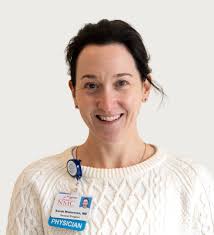
Dr. Sarah Waterman is a general surgeon at Copley Hospital in Vermont, where her practice spans breast cancer, trauma, and wound care for a community that often can’t travel for advanced treatment. Before medicine, she worked in emergency planning and disaster management — including a post-Katrina deployment in North Carolina — before training in a general surgery program at Mission Hospital in Asheville, where she helped run the first-in-human clinical trial of Microlyte® as a resident.